why I chose non-nano zinc oxide.
Mineral or chemical? Nano or non-nano? Get to know what’s behind our SPF 50.
the short version.
When Mary and I started developing SunKids™, one of the most important decisions was choosing the ingredient that would provide our sun protection. We chose non-nano zinc oxide. More specifically, 24.1% non-nano zinc oxide, the active sunscreen ingredient behind our Broad Spectrum SPF 50 formula. But I want to explain why we made that choice without turning it into another conversation about which ingredients people should be afraid of.
Because mineral and chemical sunscreens both have a place in sun protection. And understanding how they work is much more useful than simply labeling one good and the other bad. Here’s what I think is worth knowing.
first, let’s talk about UV filters.
Every sunscreen needs active ingredients that protect skin against ultraviolet radiation. These are called UV filters. In the United States, sunscreen filters are generally grouped into two categories: mineral and chemical. Mineral sunscreens use zinc oxide, titanium dioxide, or both. Chemical sunscreens use organic UV filters such as avobenzone, octocrylene, or octinoxate.
Both types can provide effective sun protection when properly formulated and tested. The biggest differences come down to the ingredients used, how they interact with UV radiation, and the way the finished sunscreen feels on skin. And there’s something important I want to clarify. You’ll often hear that mineral sunscreen reflects sunlight while chemical sunscreen absorbs it.
That’s an oversimplification. Zinc oxide and titanium dioxide also absorb a substantial amount of UV radiation, while reflecting and scattering some of it. The real distinction is the type of UV filter being used. Not that one acts like a mirror and the other doesn’t.
why zinc oxide caught my attention.
As a microbiologist, I tend to look closely at how ingredients perform and what the available research tells us. Zinc oxide has a long history of use in sunscreen. It’s a mineral UV filter that provides protection across the UVA and UVB spectrum. That broad coverage was one of the reasons we chose it for SunKids™. UVA rays contribute to premature skin aging and can damage skin even when they don’t cause an immediate sunburn.
UVB rays are primarily responsible for sunburn. Both contribute to skin damage and skin cancer risk. That’s why broad-spectrum protection matters. We wanted to build our formula around a mineral ingredient with an established role in protecting skin against both types of UV radiation. And zinc oxide gave us that foundation.
so, what does non-nano actually mean?
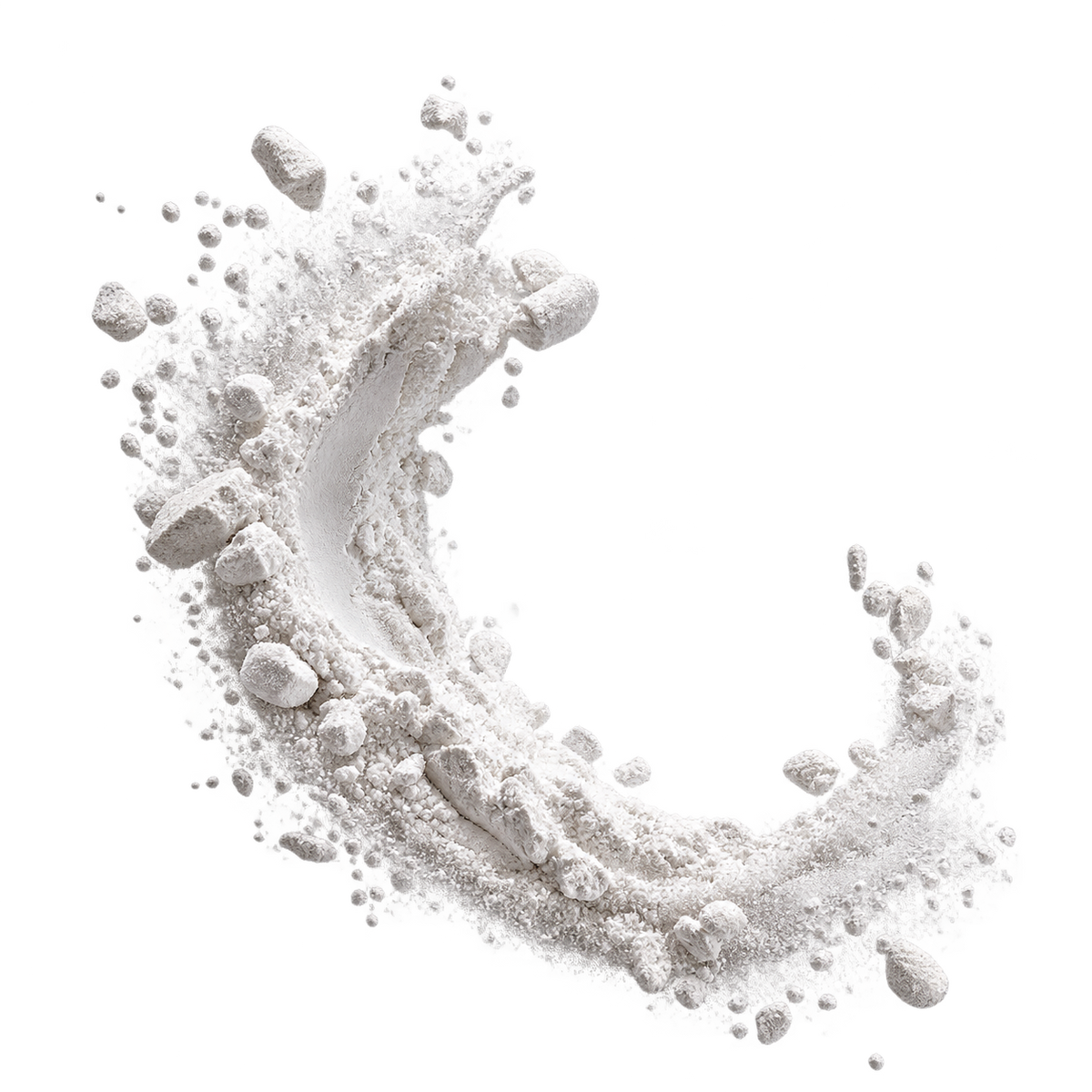
This is where sunscreen conversations can become confusing. Zinc oxide can be manufactured in different particle sizes. The terms nano and non-nano refer to those particle dimensions. Nanomaterials are generally associated with particles that have at least one dimension in the nanoscale range, commonly around 1 to 100 nanometers.
But particle-size classification can be more complicated than a single number. Particles can have different shapes, form aggregates, and be measured using different methods. That’s why a non-nano claim should be supported by appropriate particle characterization. When we chose non-nano zinc oxide for SunKids™, it was a deliberate formulation decision.
But I don’t want parents to misunderstand what that choice means. Non-nano doesn’t automatically mean a sunscreen is safer than one containing nano-sized zinc oxide. And nano doesn’t automatically mean dangerous. The research matters more than the label.
does zinc oxide absorb into your skin?
This is one of the questions I think deserves a clear answer.
Current evidence indicates that zinc oxide nanoparticles in conventional sunscreen formulations generally remain on the skin’s surface and within its outermost layers when applied to intact skin.
Research hasn’t established meaningful penetration of intact zinc oxide particles into the bloodstream through normal sunscreen application. That’s an important distinction because you’ll sometimes see claims suggesting that nano-sized zinc oxide automatically enters the body and causes harm. Those claims go beyond what the available evidence supports.
Non-nano zinc oxide was our formulation preference, but I wouldn’t use that decision to suggest that other appropriately formulated mineral sunscreens are inherently unsafe. For me, understanding what research actually shows is more important than creating fear around an ingredient.
why 24.1%?
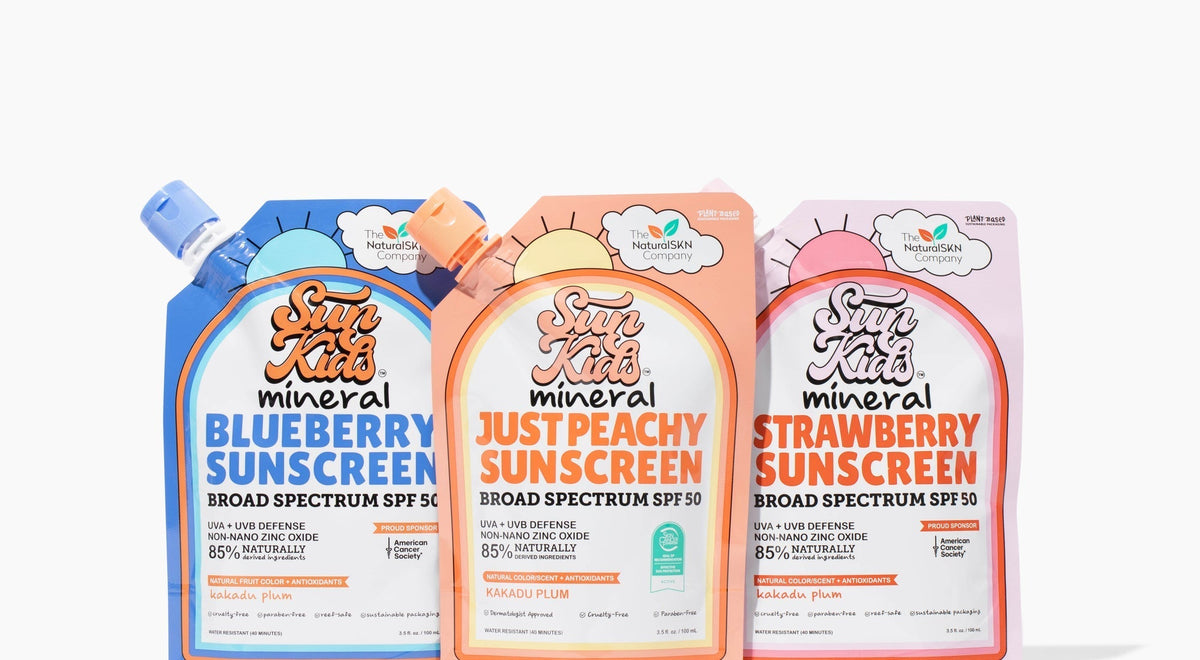
Our SunKids™ formula contains 24.1% non-nano zinc oxide. That’s the concentration of the active sunscreen ingredient in our finished product. But there’s something I want people to understand about SPF. A higher percentage of zinc oxide doesn’t automatically mean a higher SPF. Sun protection depends on the entire formulation.
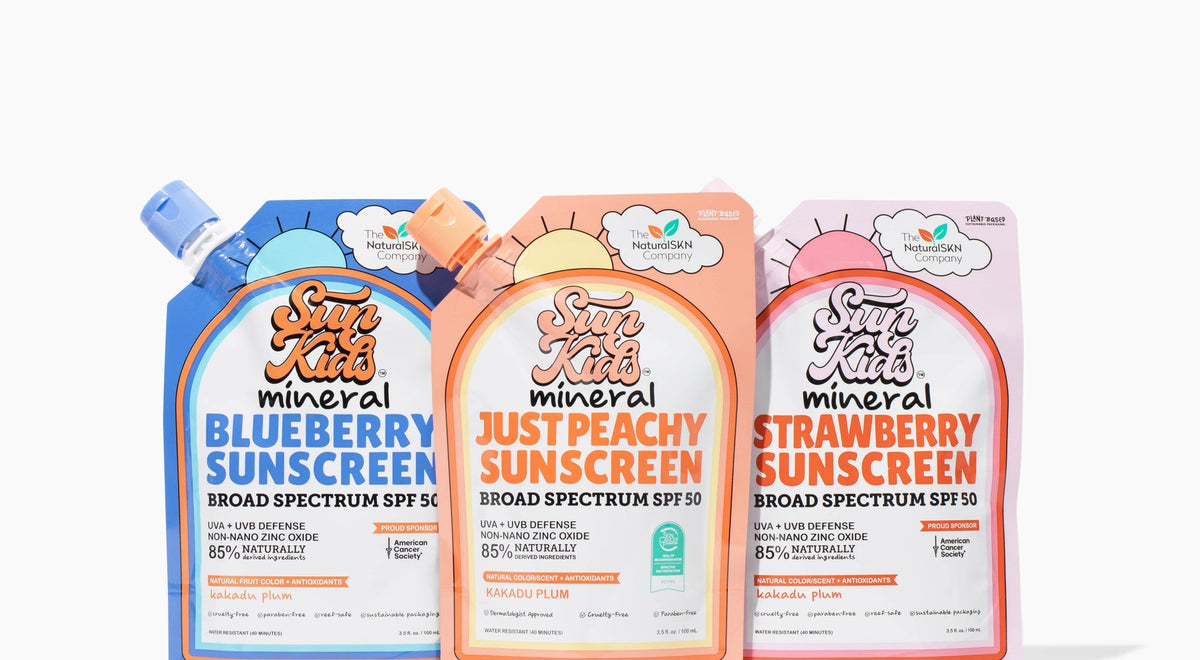
Particle characteristics, dispersion, film formation, and how evenly the sunscreen covers skin all influence performance. Two sunscreens containing the same percentage of zinc oxide can have different SPF results. That’s why testing the finished product matters. SunKids™ is labeled Broad Spectrum SPF 50 and Water Resistant (40 Minutes).
Those claims describe the performance of the sunscreen formulation, not simply the percentage of zinc oxide inside it. And that’s an important difference.
mineral sunscreen has come a long way.
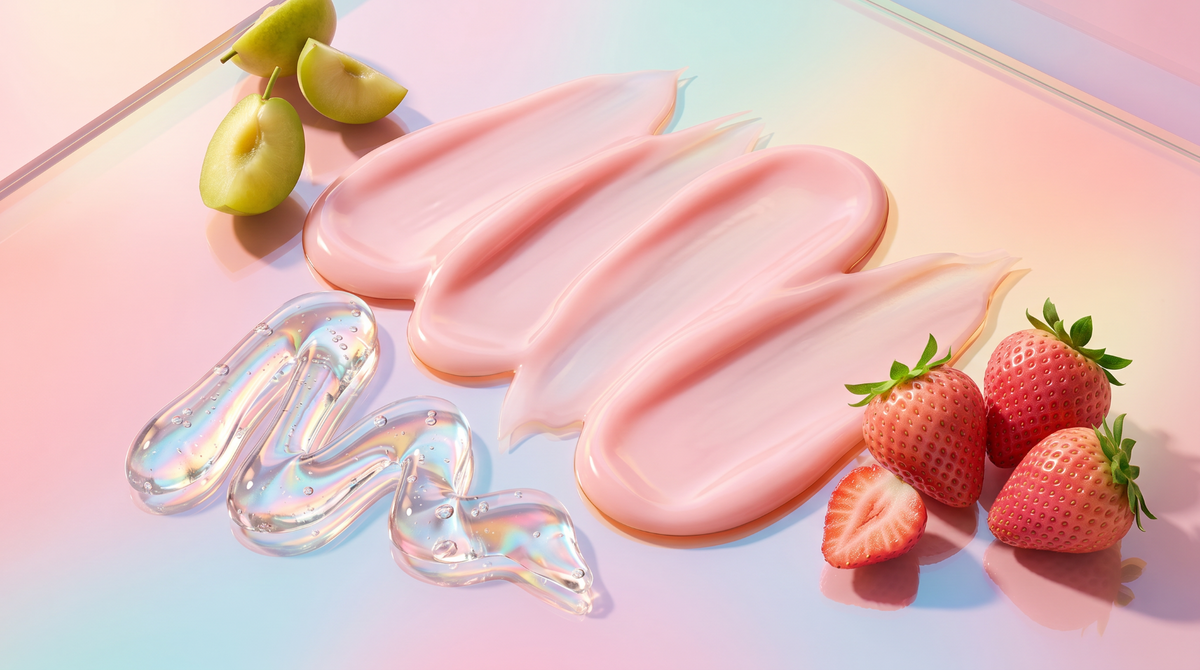
One of the biggest complaints about mineral sunscreen has always been the texture. Thick formulas. Difficult application. And the white cast that zinc oxide can leave behind. These challenges are real, particularly when working with non-nano zinc oxide. But they aren’t impossible to address. The complete formula influences how a sunscreen spreads, feels, and appears on skin.
When Mary and I developed SunKids™, we wanted to consider that experience alongside the sun protection. We included ingredients such as glycerin and squalane to support hydration and skin comfort. Vitamin E and Kakadu plum extract are also part of our formulation. And we introduced fruit-inspired colors and scents to make application a little more enjoyable.
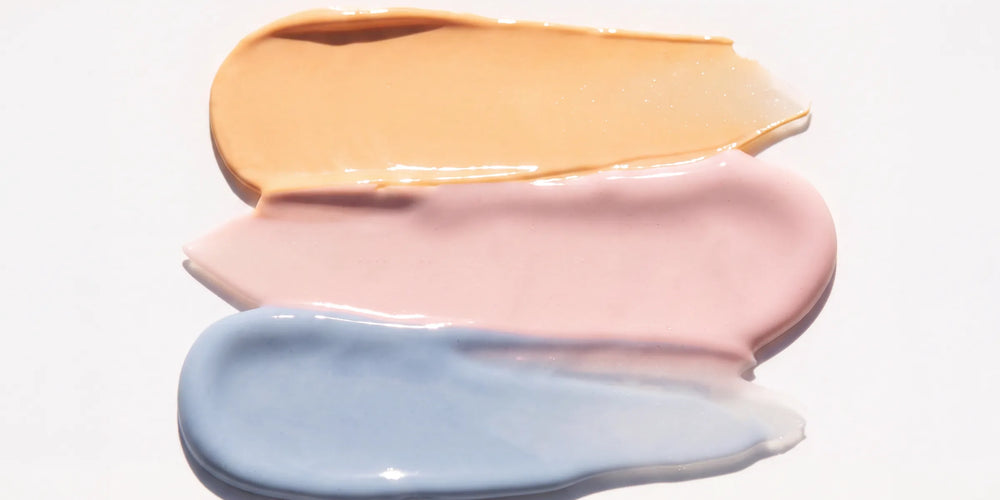
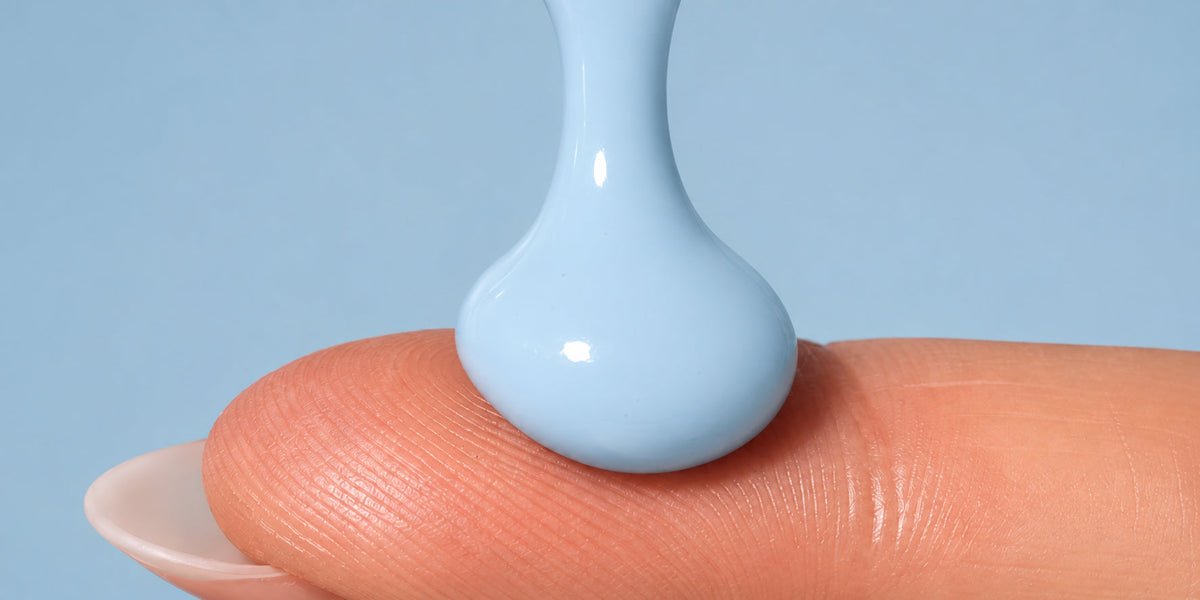
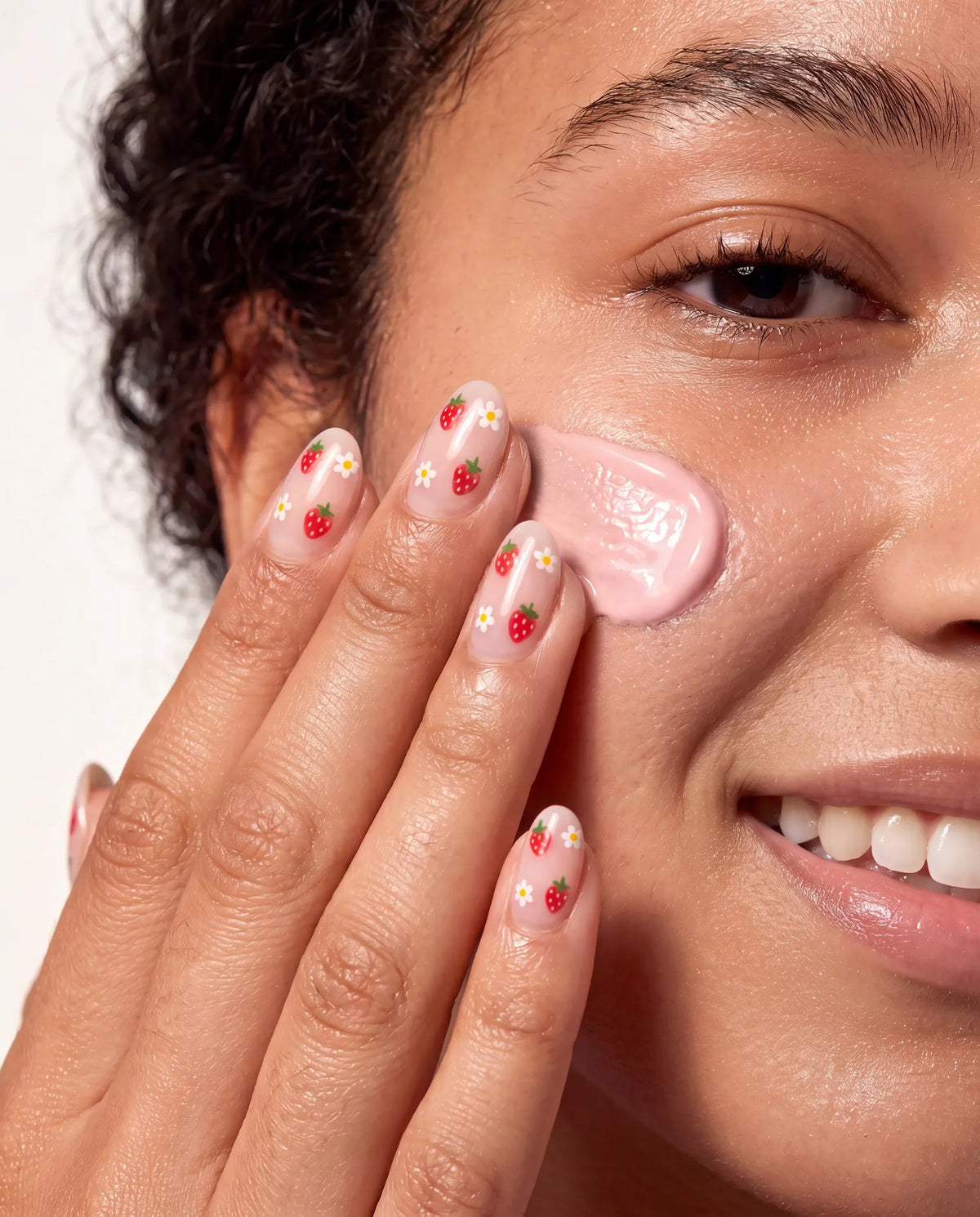
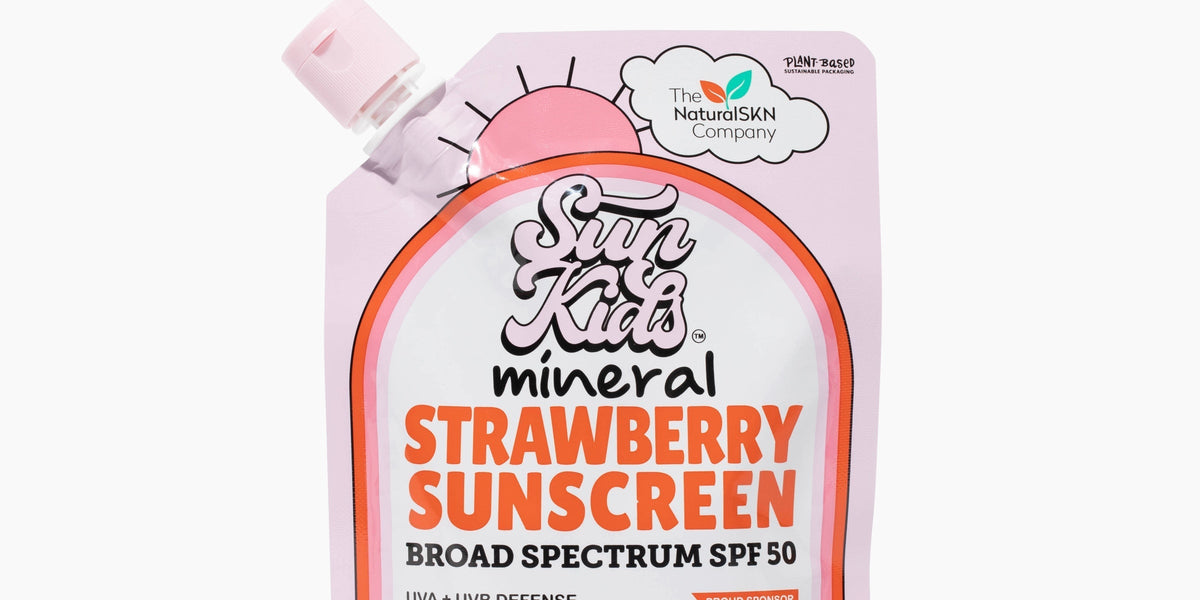
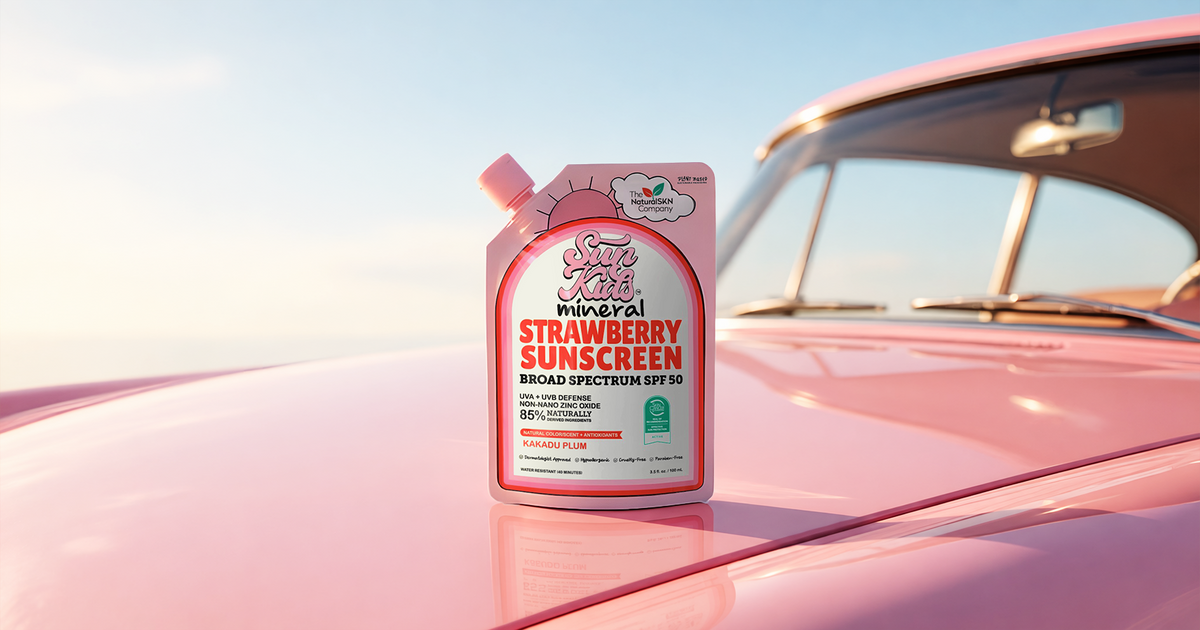
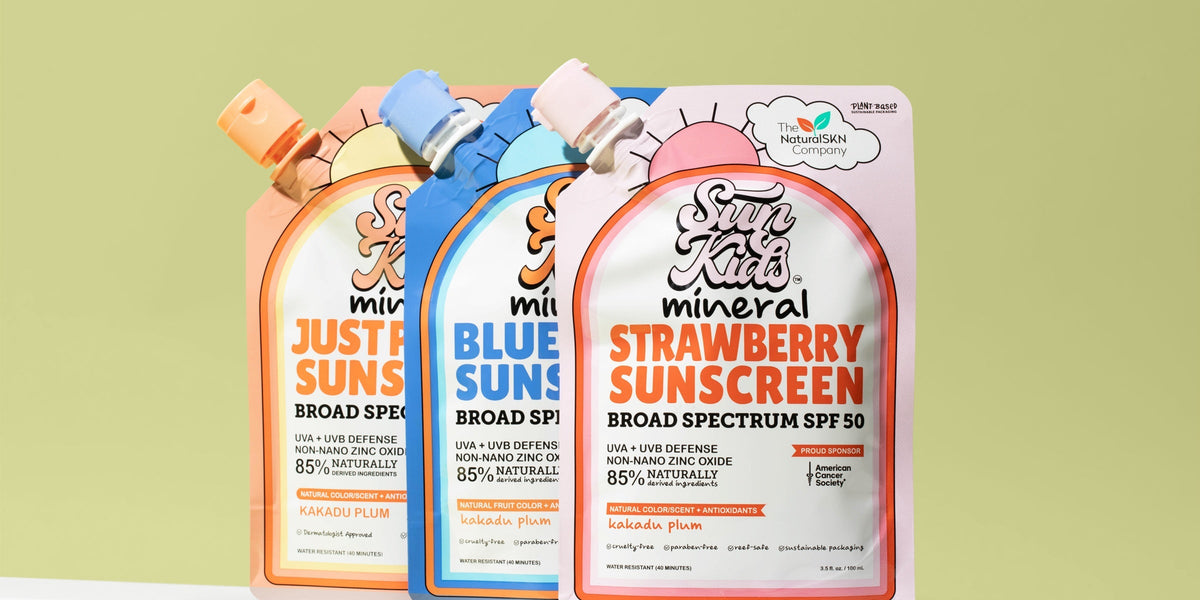
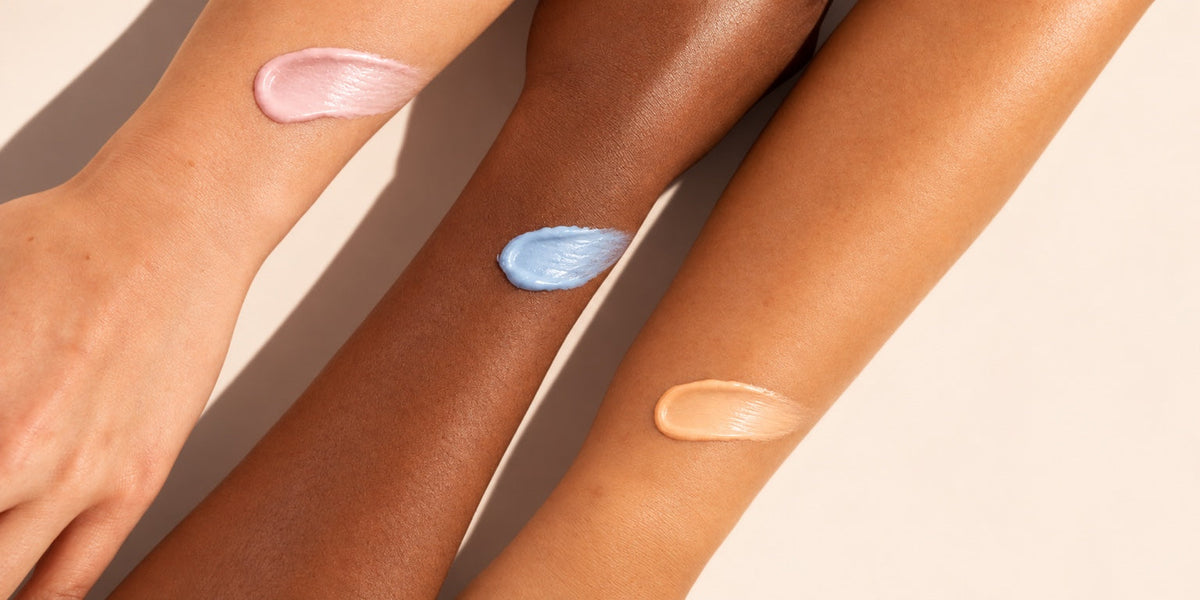
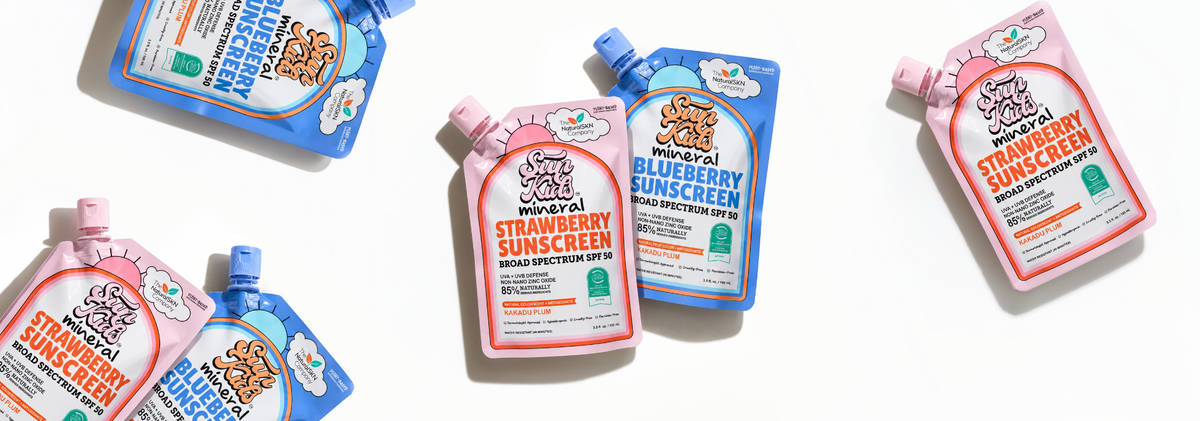
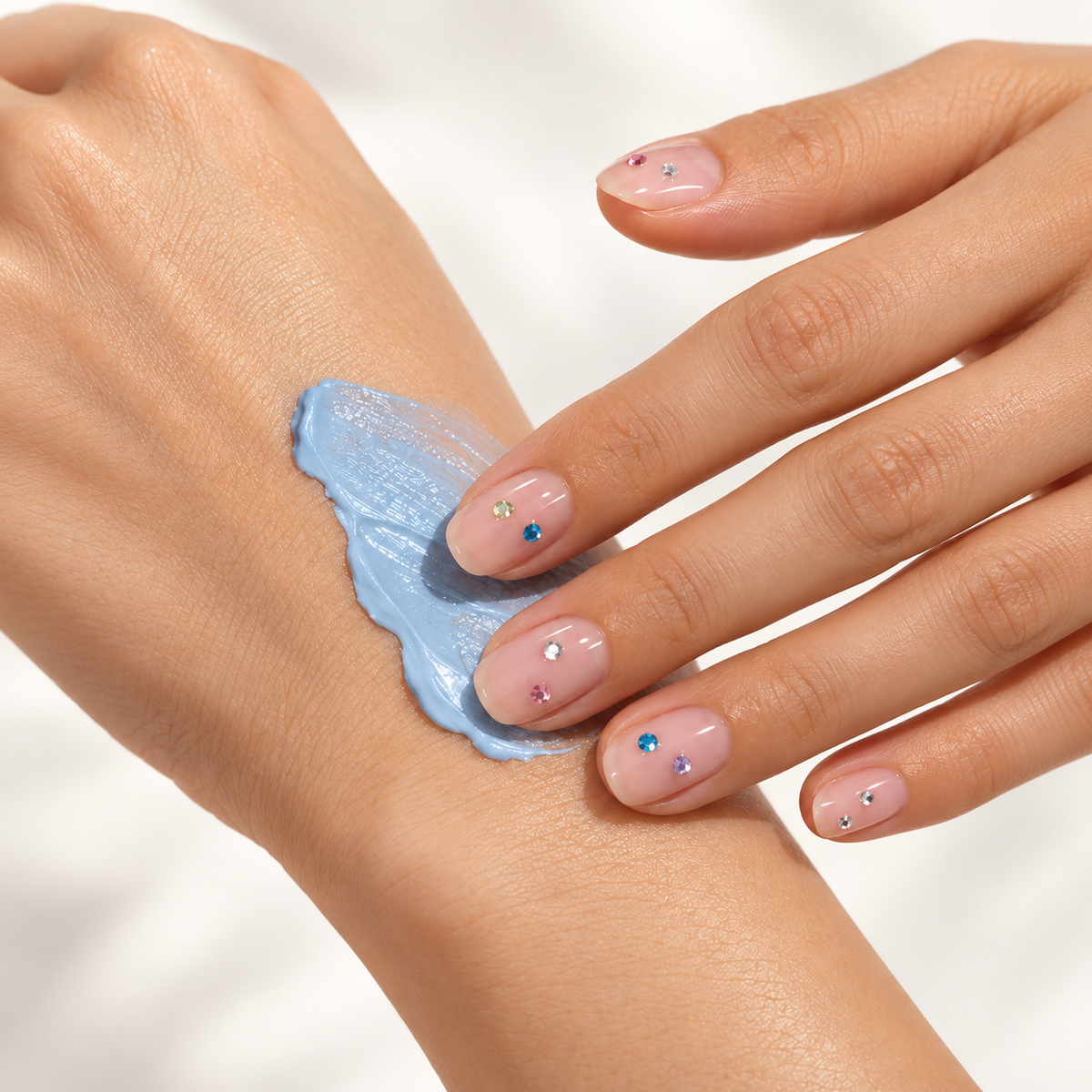
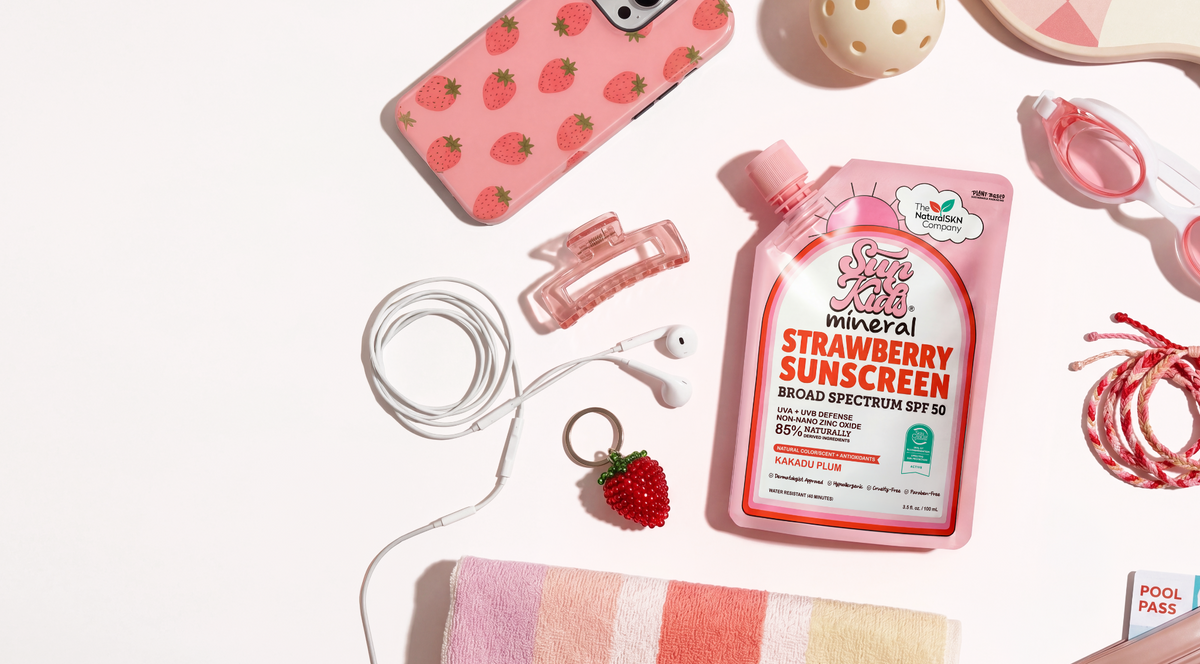
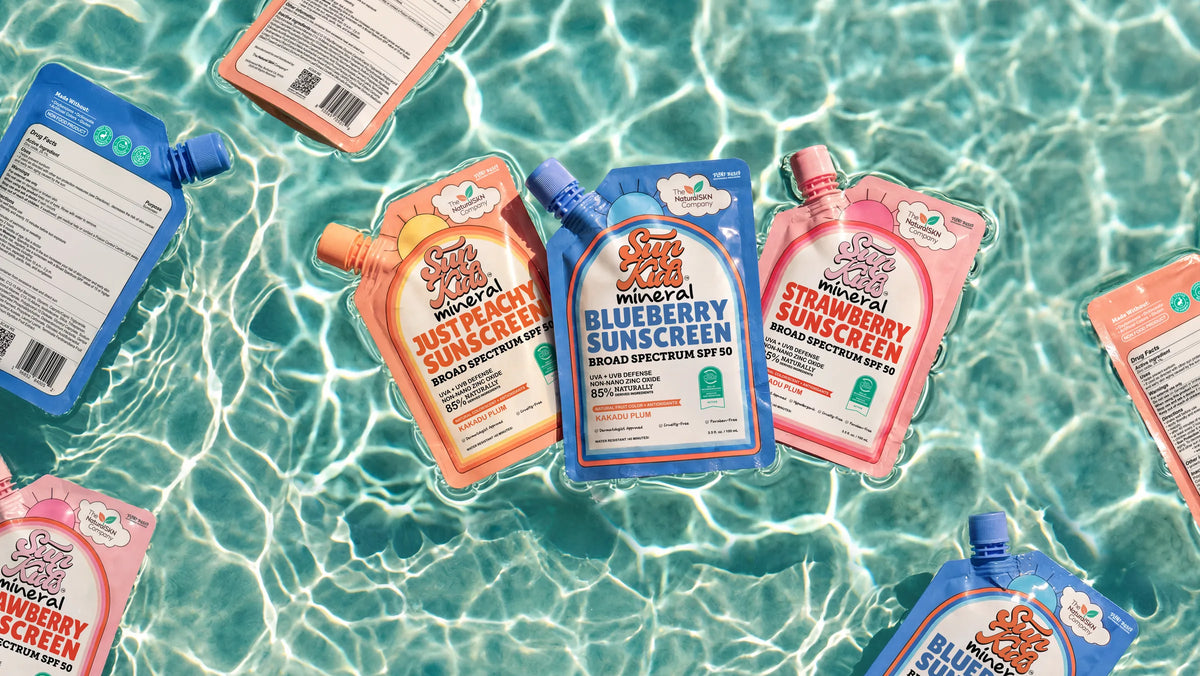
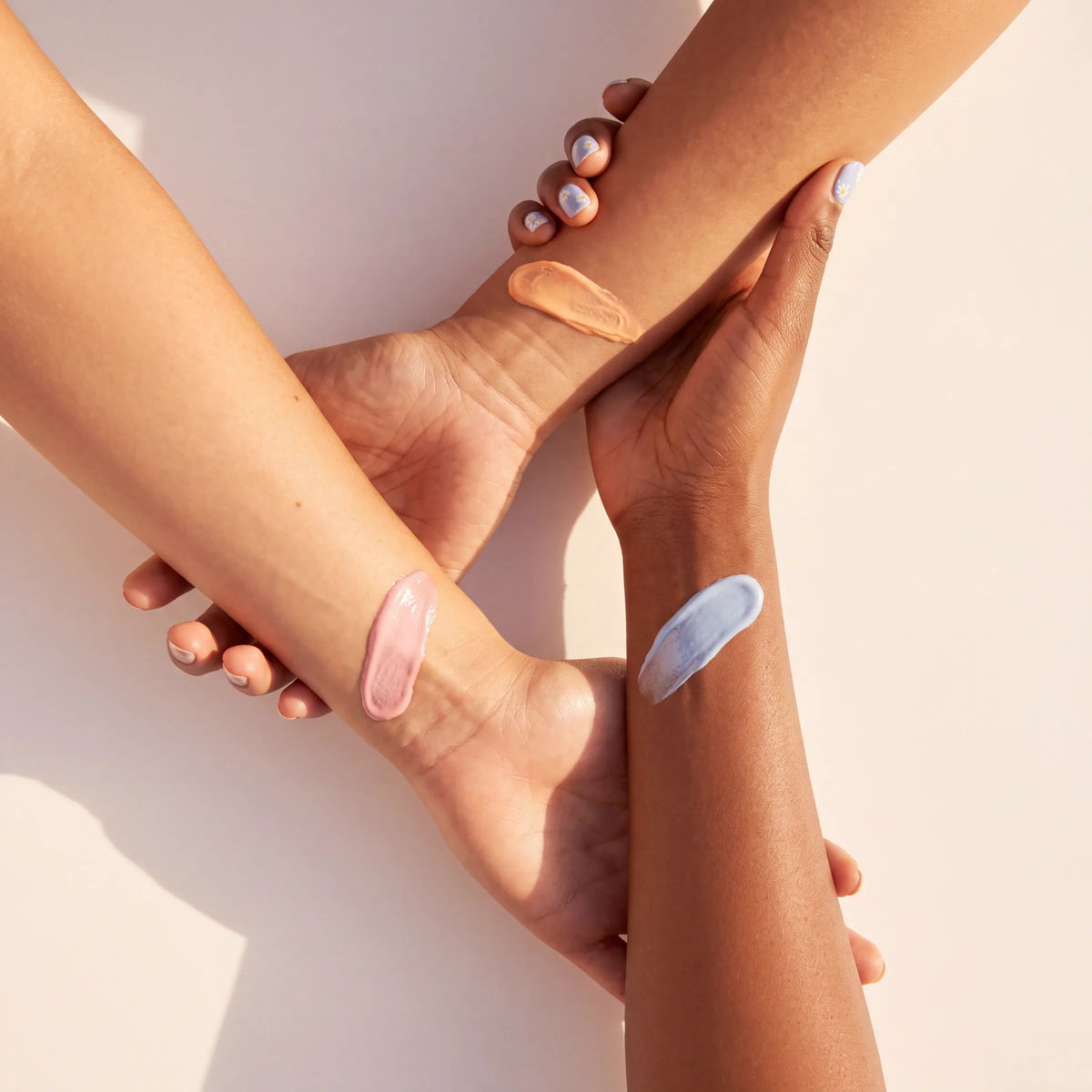
Our Blueberry mineral sunscreen goes on blue, while Strawberry has a soft pink tint. Both are designed to blend into skin without leaving a visible tint. Because a sunscreen can have strong protection on paper, but it still needs to be applied generously and evenly to provide its intended benefit.
what about chemical sunscreen?
I think it’s important to have a balanced conversation about this. Chemical UV filters are widely used in sunscreens, and many products containing them provide effective sun protection. Some chemical sunscreen ingredients have been detected in the bloodstream during absorption studies. But detecting an ingredient in the blood doesn’t automatically mean it causes harm.
It means additional safety information may be needed to fully evaluate systemic exposure.
The FDA has requested additional data for several sunscreen ingredients.
That shouldn’t be confused with a finding that all chemical sunscreens are unsafe. At the same time, concerns about certain UV filters and their potential environmental effects are legitimate areas of ongoing research. Those effects vary by ingredient, concentration, and environmental conditions. It’s one reason we chose not to use chemical UV filters in SunKids™.
But I don’t believe families should avoid sun protection because they’re worried about choosing the wrong sunscreen. An appropriately labeled, broad-spectrum sunscreen used correctly is better than skipping sunscreen altogether. You can learn more about our ingredient decisions in what we leave out and why.
and what about the ocean?
This is another area where I think we need more careful language. You’ll often see mineral sunscreens described as reef-safe or reef-friendly. But those terms don’t have universally accepted regulatory definitions. And a sunscreen containing zinc oxide isn’t automatically proven harmless to marine ecosystems. Environmental effects depend on many factors, including particle characteristics, concentration, exposure, and the surrounding conditions.
Some research has raised questions about the environmental behavior of both organic UV filters and mineral particles. That’s why I prefer being specific about what our formula contains rather than making broad environmental promises. SunKids™ is formulated without oxybenzone and octinoxate, the two sunscreen ingredients restricted under Hawaii’s Act 104.
That is a specific formulation choice. It doesn’t mean we’ve established that the finished sunscreen has no environmental impact. I think consumers deserve to understand that difference.
what I want families to remember.
The best sunscreen isn’t necessarily the one with the longest ingredient list, the highest zinc percentage, or the most reassuring marketing language. It’s one that provides appropriate UV protection, works for your skin, and is used correctly. For SunKids™, we chose non-nano zinc oxide because it aligned with the type of mineral sunscreen we wanted to create.
We developed the rest of the formula around that decision, considering texture, hydration, application, and everyday use. But no sunscreen works perfectly if it isn’t applied properly. SunKids™ should be applied liberally and evenly 15 minutes before sun exposure. Reapply after 40 minutes of swimming or sweating, immediately after towel drying, and at least every two hours.
And remember that sunscreen works alongside shade, protective clothing, hats, and sunglasses. For babies younger than six months, ask a doctor before using sunscreen. The goal isn’t to make sun protection complicated. It’s to make it something families understand and practice consistently.
why I stand behind our choice.
When I look at SunKids™, I see more than a sunscreen with 24.1% non-nano zinc oxide. I see a product built around a series of thoughtful decisions. Why this UV filter? Why this concentration? How will it feel? Will families enjoy using it? And what can we actually support with testing? Those are the kinds of questions I believe matter when developing skincare.
I don’t think we need to make other sunscreen ingredients sound dangerous to explain why we chose ours. We can simply be clear about what we use, why we use it, and what our finished formula is designed to do. Because good science isn’t about making the loudest claim. It’s about making informed choices and being able to explain them.
a little more to explore.
Curious about the ingredients and research behind our mineral sunscreen?
To see how the same sunscreen active can sit within different ingredient lists, read our Blueberry, Strawberry and Just Peachy comparison.
Learn more at theNaturalSKNcompany.com